Research Reveals Rural Young People Face Unique Digital Mental Health Challenges
Young people today are navigating mental health challenges in a time of constant digital connection. Social media and digital technology are woven into nearly every aspect of their daily lives. For rural young people, experiences with mental health, social media, and help-seeking are shaped by a mix of isolation and opportunity. Digital spaces can serve as both a lifeline and a landscape to navigate with care.

The research identified several factors contributing to lower digital mental health engagement among rural young people, including limited internet connectivity, stigma around mental health discussions, lack of parental support, and concerns about privacy in small communities.

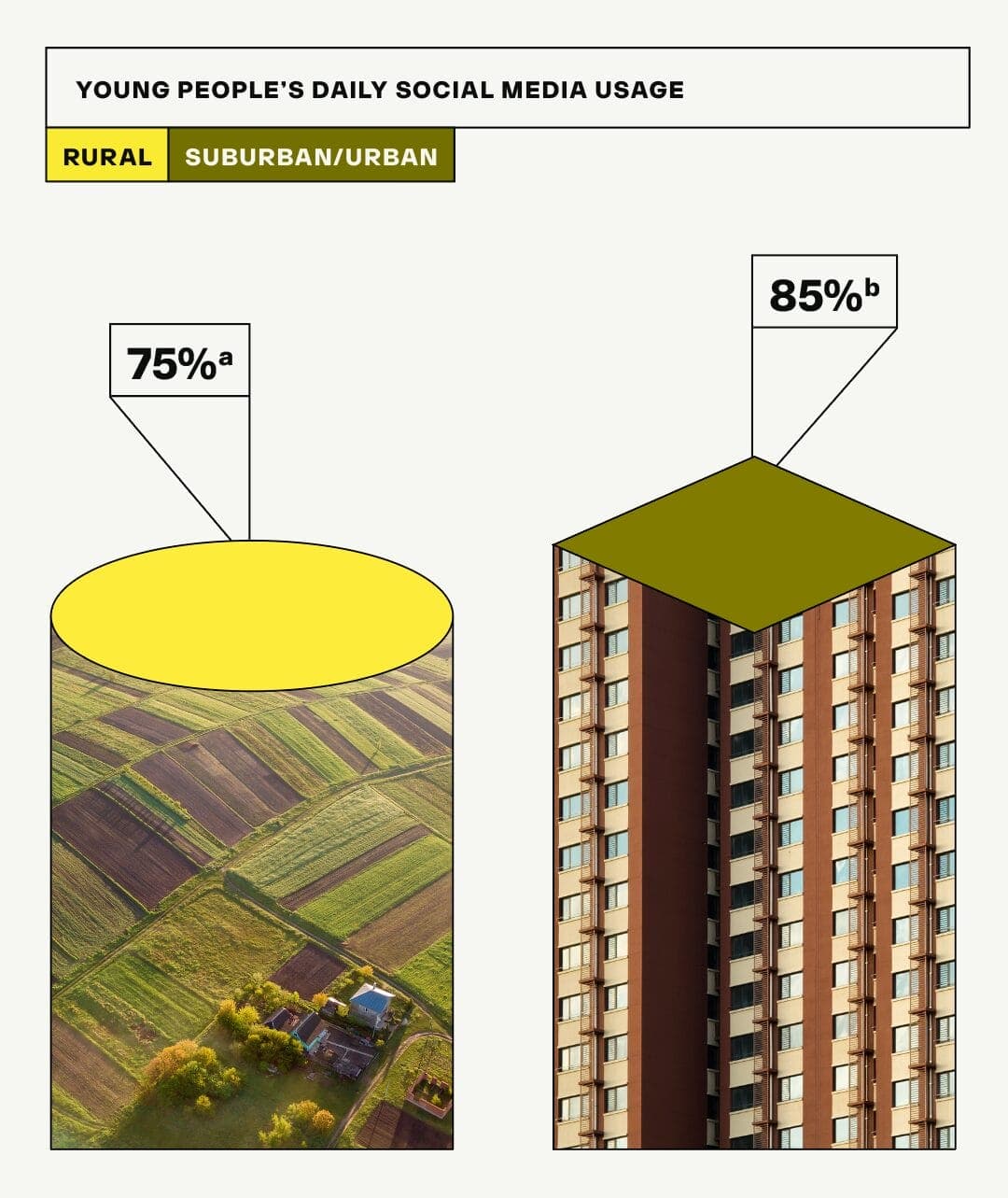
Among survey respondents, 75% of rural young people reported using social media daily, compared to 85% of those in suburban/urban areas.
Rural young people are significantly more likely than their suburban/urban peers to prefer communicating through social media rather than in person (49% vs. 38%).
In co-distillation interviews, rural young people explained that although they may use social media less frequently overall, it remains a meaningful way to connect with people in ways that feel safer both within and beyond their rural communities.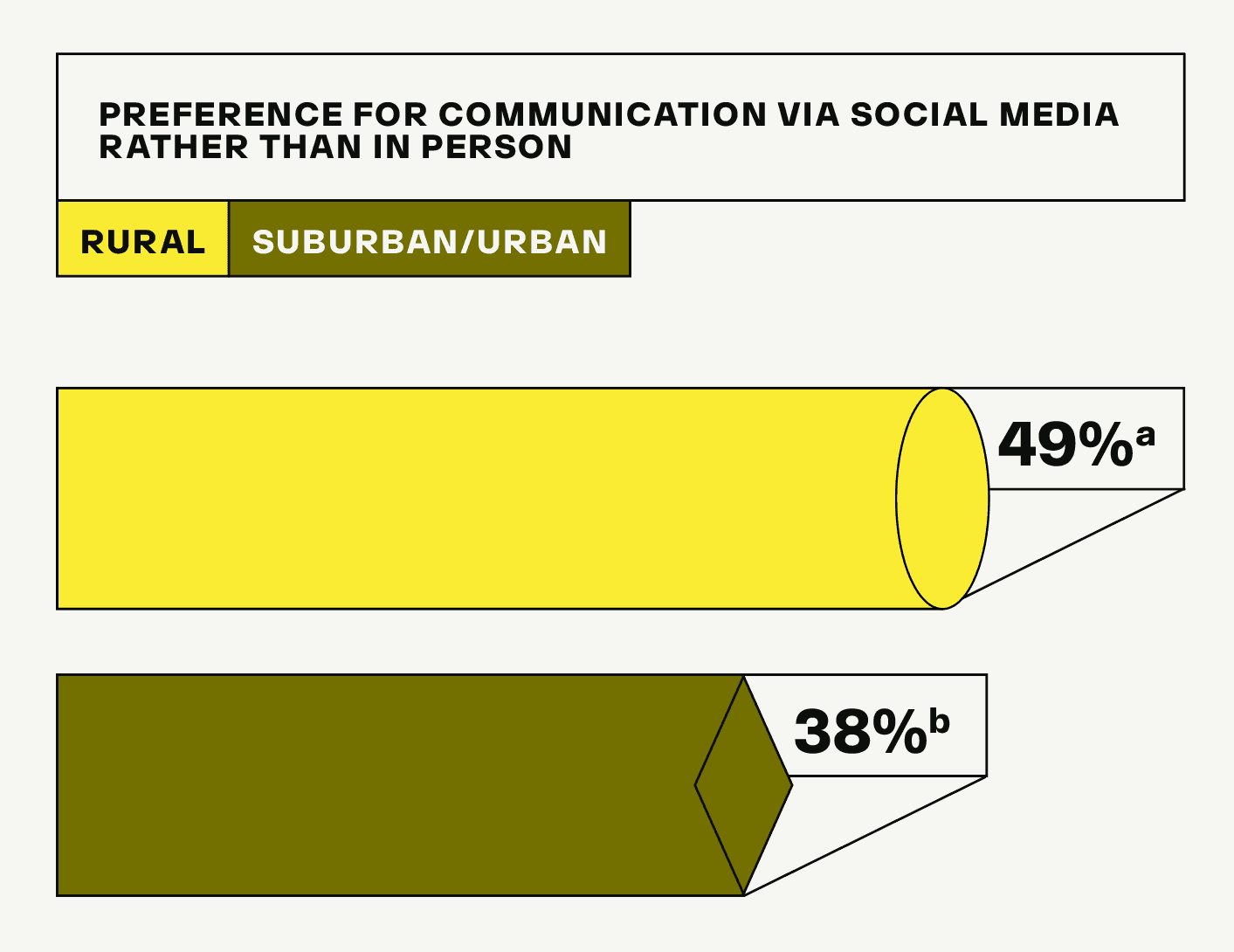
Rural young people report rates of moderate to severe depression (30% vs. 28%) and moderate to severe anxiety (24% vs. 24%) that are comparable to those of their suburban/urban peers.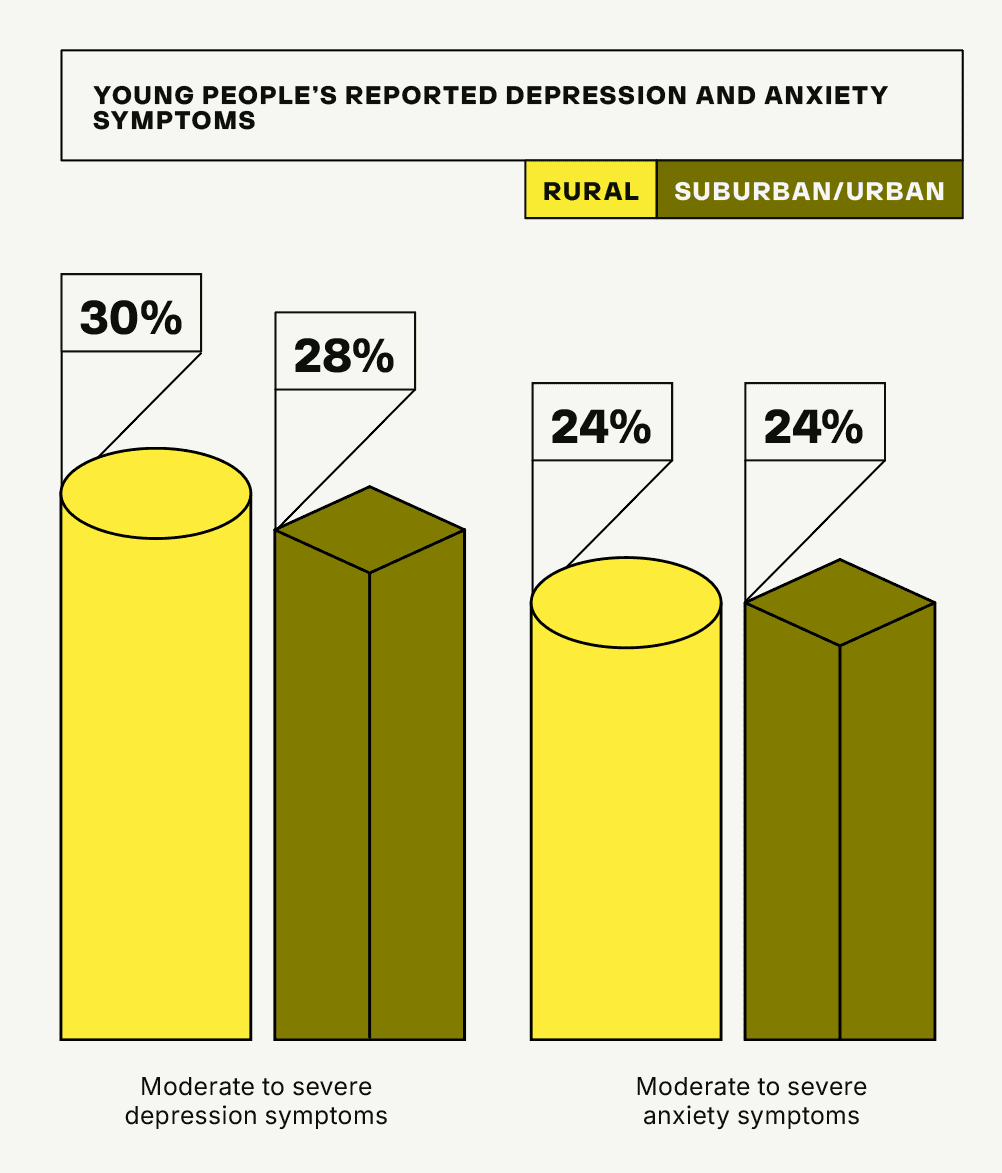
Despite having comparable rates of moderate to severe depression and anxiety compared to their suburban/urban peers, rural young people are less likely to use apps related to mental health and well-being for most topics. Specifically, rural participants were less likely than their suburban/urban peers to report using apps for quitting smoking or vaping (6% vs. 11%), depression (13% vs. 19%), sleep (14% vs. 36%), anxiety (15% vs. 21%), mood tracking (15% vs. 22%), stress reduction (17% vs. 24%), happiness or well-being (19% vs. 27%), and meditation/mindfulness (19% vs. 32%).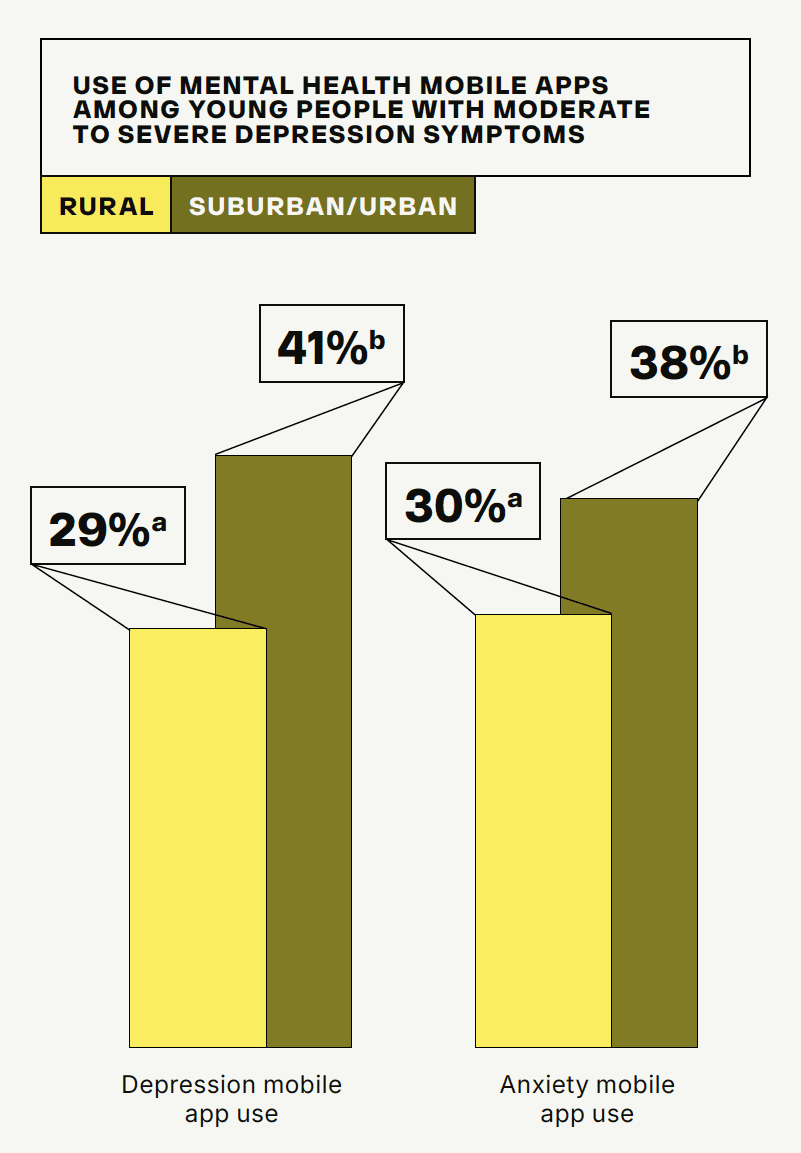
Rural young people are significantly less likely to report having ever attended online therapy (20%) compared to their suburban/urban young peers (28%).
Rural young people are more likely than suburban/urban young people to report permanently stopping social media use in the past 12 months because of harassment and negative experiences (36% vs. 26%) and because they felt tempted to spend too much time on it (47% vs. 39%).
Rural young people are significantly less likely than their suburban/urban peers to encounter comments on social media that affirm people from different racial and ethnic backgrounds (50% vs. 67%), LGBTQ+ identities (51% vs. 66%), and intersectional identities (54% vs. 62%).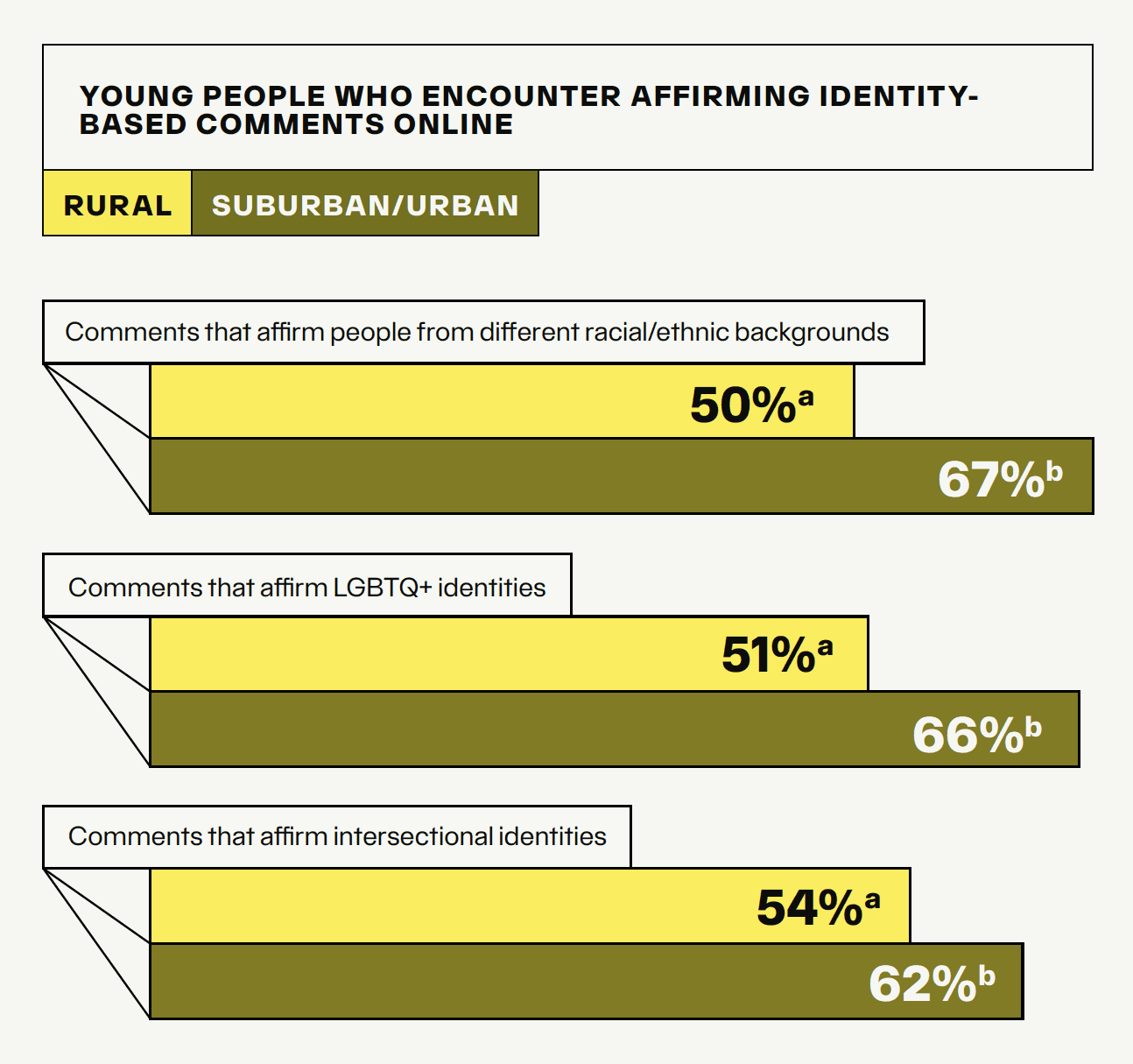
Rural young people are significantly less likely to report having a high sense of life purpose compared to suburban/urban young people (48% vs. 57%).