Report
Young people under financial pressure are two times more likely to report poor mental health, yet 9 in 10 identify clear sources of hope.
Research from Hopelab, in partnership with Data for Progress, highlights how financial strain is shaping young people’s lives and where they are still finding strength.

This research is based on a national sample of 1,304 young people aged 13 to 24. The findings come at a time when 57% of U.S. adults rate their finances as “fair” or “poor,” underscoring the broader context of financial anxiety many families carry. Within those households, young people are not only seeing the stress — they are feeling it.
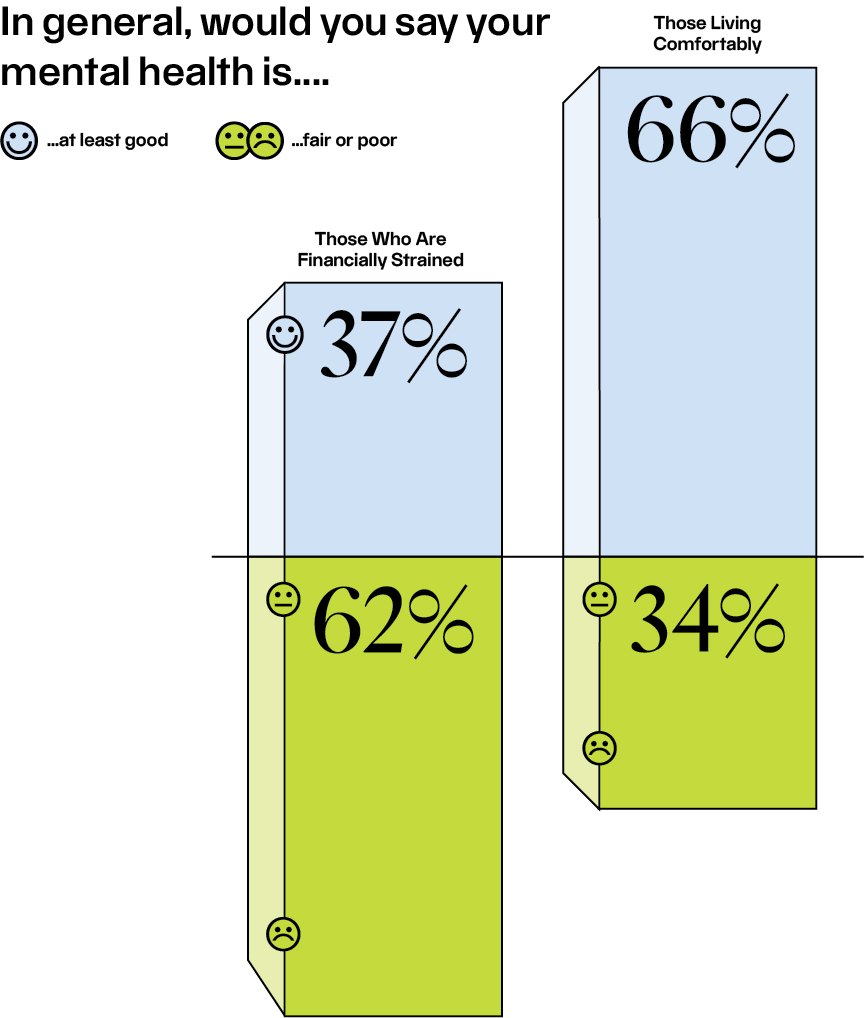
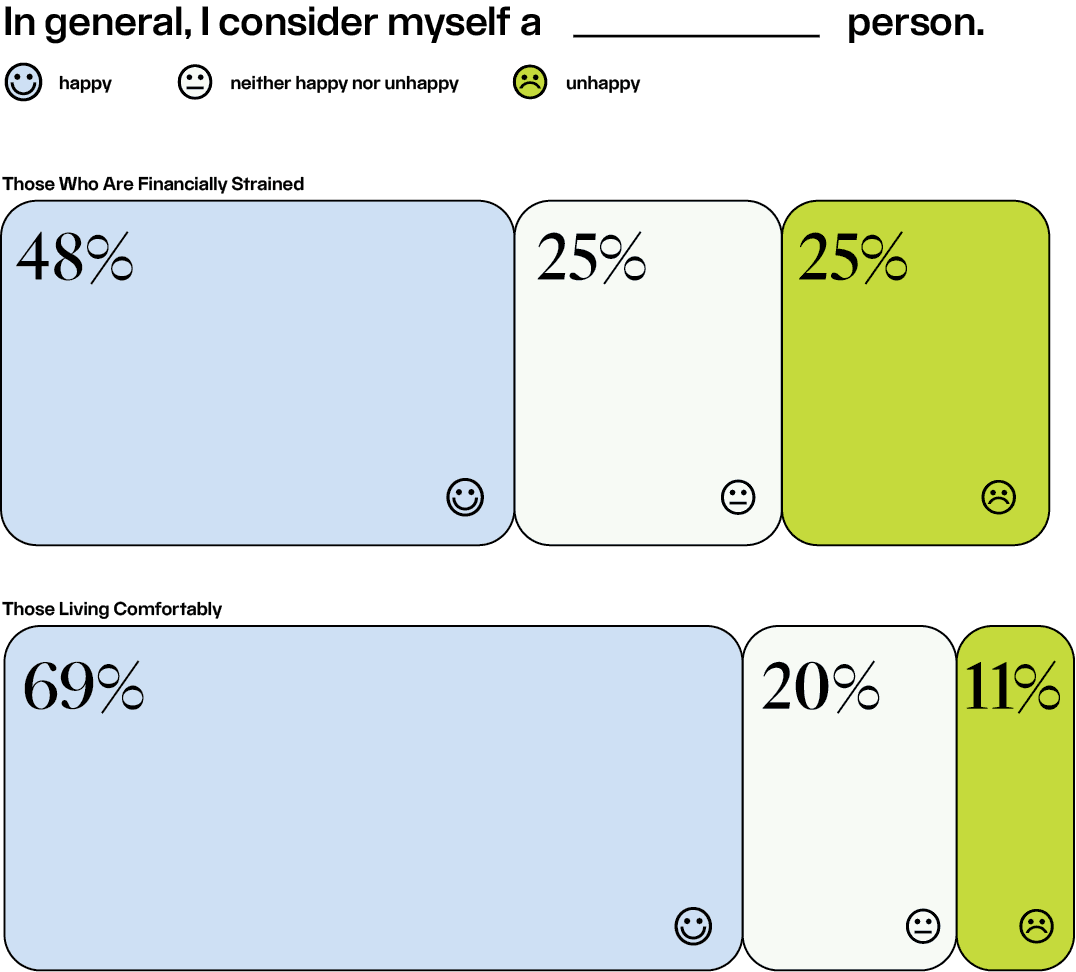
Not having enough money for basic needs is a major source of stress. Nearly two-thirds (63%) of young people under financial strain say this common stressor harms their mental health, compared with 22% of young people who live comfortably. Young people under financial strain also report bigger mental health impacts from family issues (61% vs. 40%), worries about the job market (50% vs. 31%), and debt (47% vs. 34%).
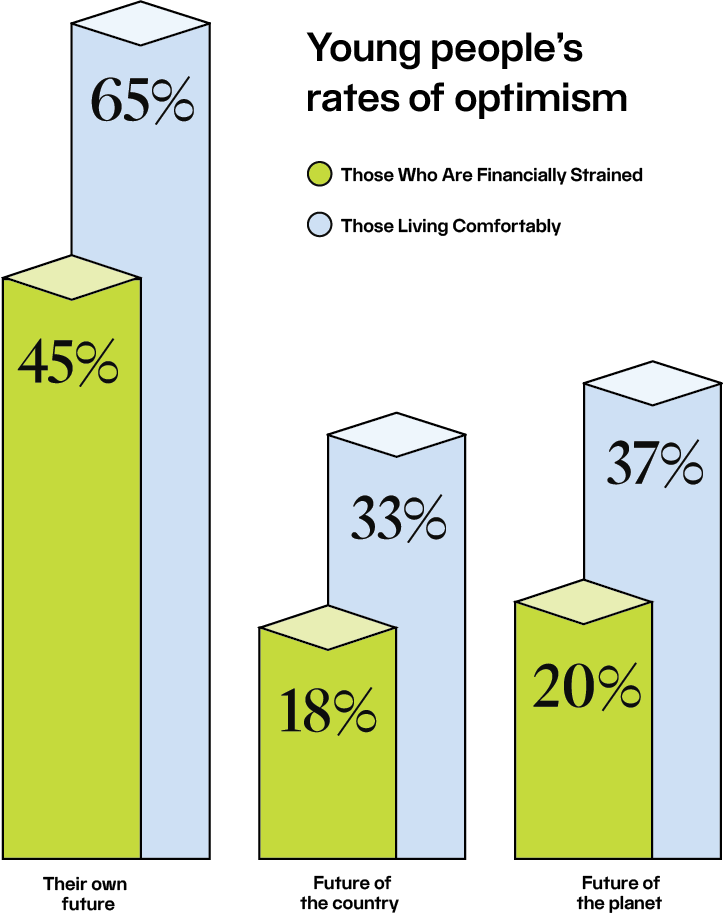
Many of the largest gaps involve goals tied to income. For example, 29% of young people under financial strain feel moderately confident they can afford college, compared with 62% of those who live comfortably. Young people under financial strain also report lower confidence in goals that are not directly about income, including having close and meaningful friendships (63% vs. 76%) and being emotionally stable (62% vs. 72%). Even when a goal is not directly related to income, financial strain can make it feel harder to achieve.

Young people under financial strain report many stressors that drain their mental health. They also report less optimism about the future and less confidence in achieving important life goals. Even so, more than 90% endorse at least one source of hope or optimism for the future. Nearly half say knowing there are people who love them and want to see them succeed gives them hope (45%). Other common sources of hope include having clear personal goals or a sense of direction in life (42%) and belief in their own inner strength (41%). Some sources of hope, including intergenerational activism, appear at similar rates among young people under financial strain and those who live comfortably.
At the same time, young people under financial strain report lower rates for many sources of hope compared with those who live comfortably.
The report serves as a reminder that financial stress is a youth mental health issue with long-term implications. The findings also point to practical areas where progress is possible now: