A national poll reveals the complex reality and stark disparities of youth mental health while emphasizing youth voices in solutions.
Developed in collaboration with 30 young people ages 13-24 across the United States, the study examines what young people currently believe affects their mental health and well-being, their hopes and fears about the future, and their key sources of emotional and social support. The national poll, co-published with Data for Progress, challenges oversimplified “crisis narratives” about youth mental health while revealing significant disparities among young people based on identity and economic circumstances.

The findings underscore that mental health concerns persist — particularly among Queer youth, girls and women, and those facing economic hardship. Young people are calling for a fundamental shift in how older generations approach supporting them. When asked what older generations are missing, one theme emerged above all others: the need for respect and genuine listening to the needs of young people.

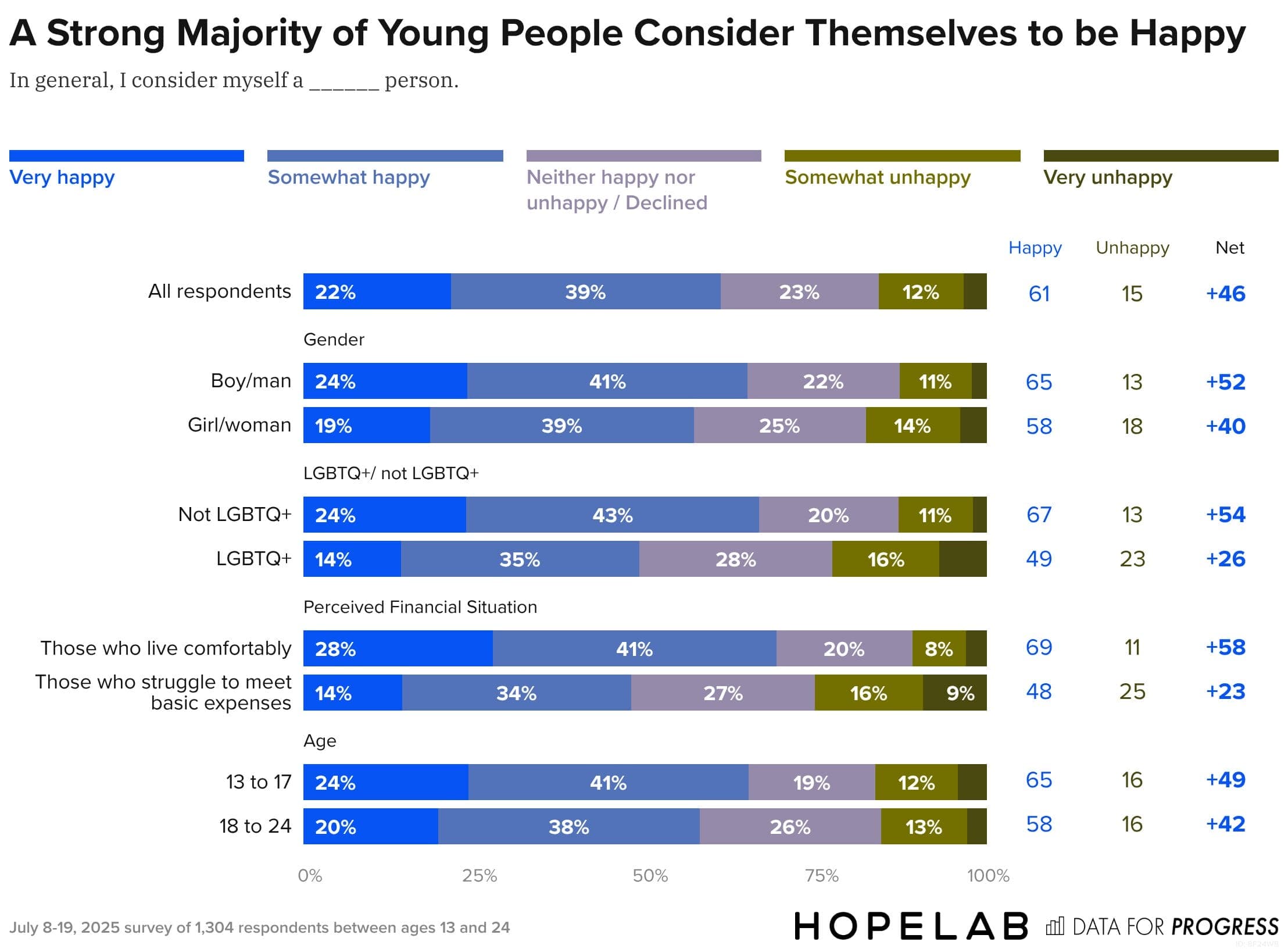
A majority of young people (61%) say they would consider themselves to be a “somewhat” or “very” happy person. A plurality (39%) of young people specifically say they consider themselves to be “somewhat happy.”
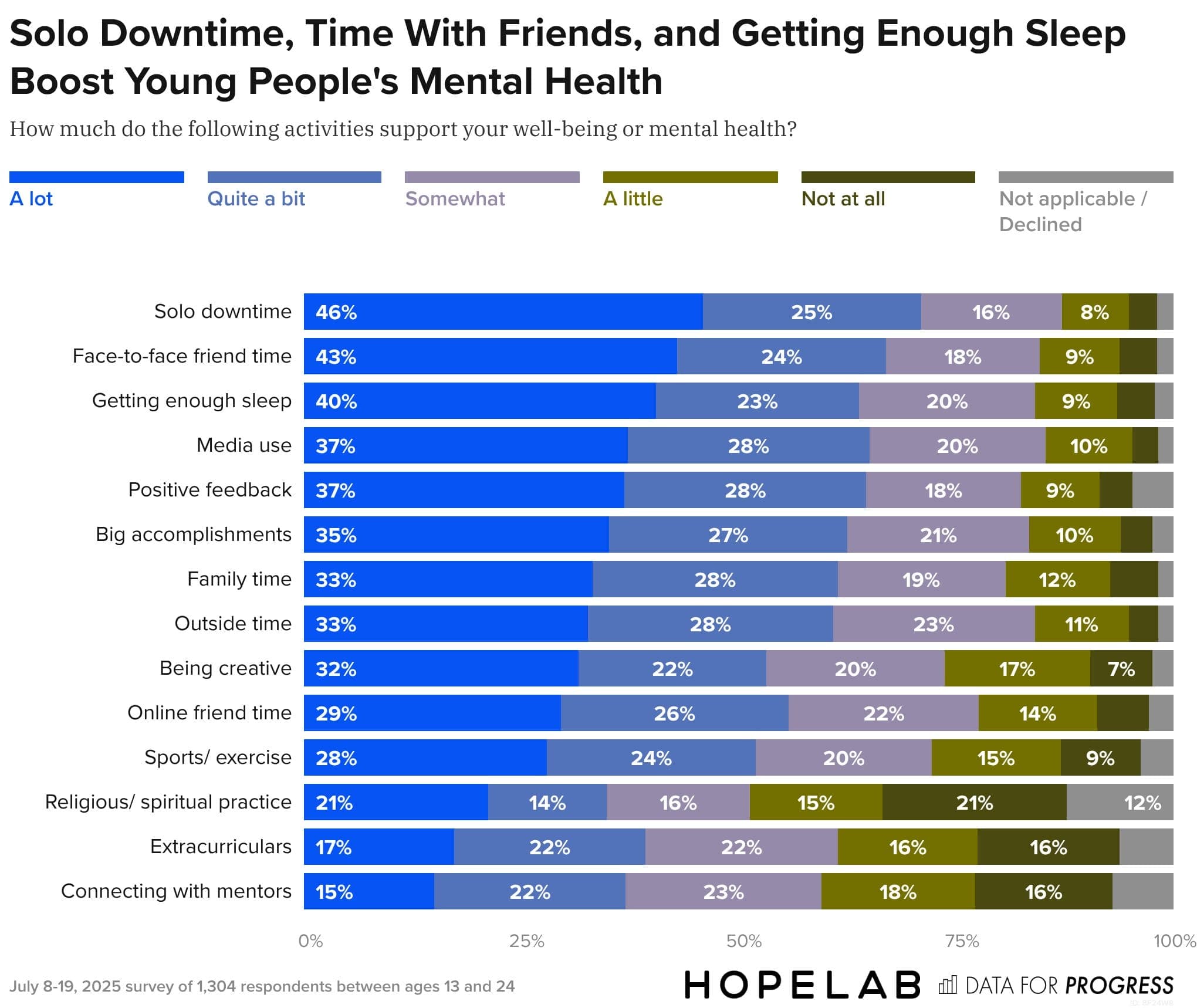
Young people possess diverse and creative resources for supporting their mental health, including engaging with digital media. They also recognize the value of balancing time online with in-person socializing and getting enough sleep.
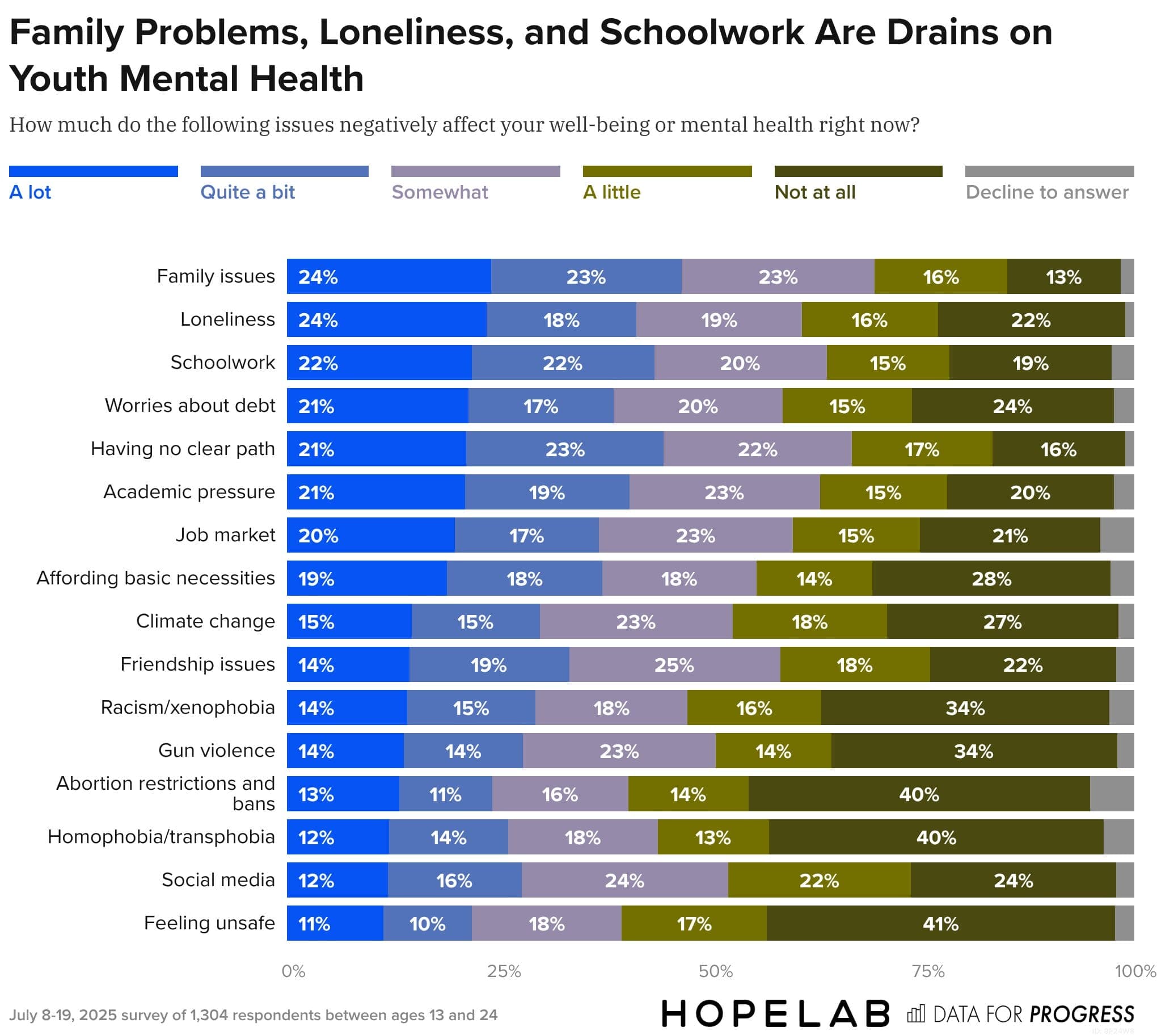
While it’s promising that young people are aware of activities that support their mental health and well-being, too many young people still report poor outcomes. When asked which issues negatively affect their mental health, young people largely point to issues related to their family, friends, and school, as well as their current and future economic concerns. Some of these factors impact daily functioning for a substantial number of young people.
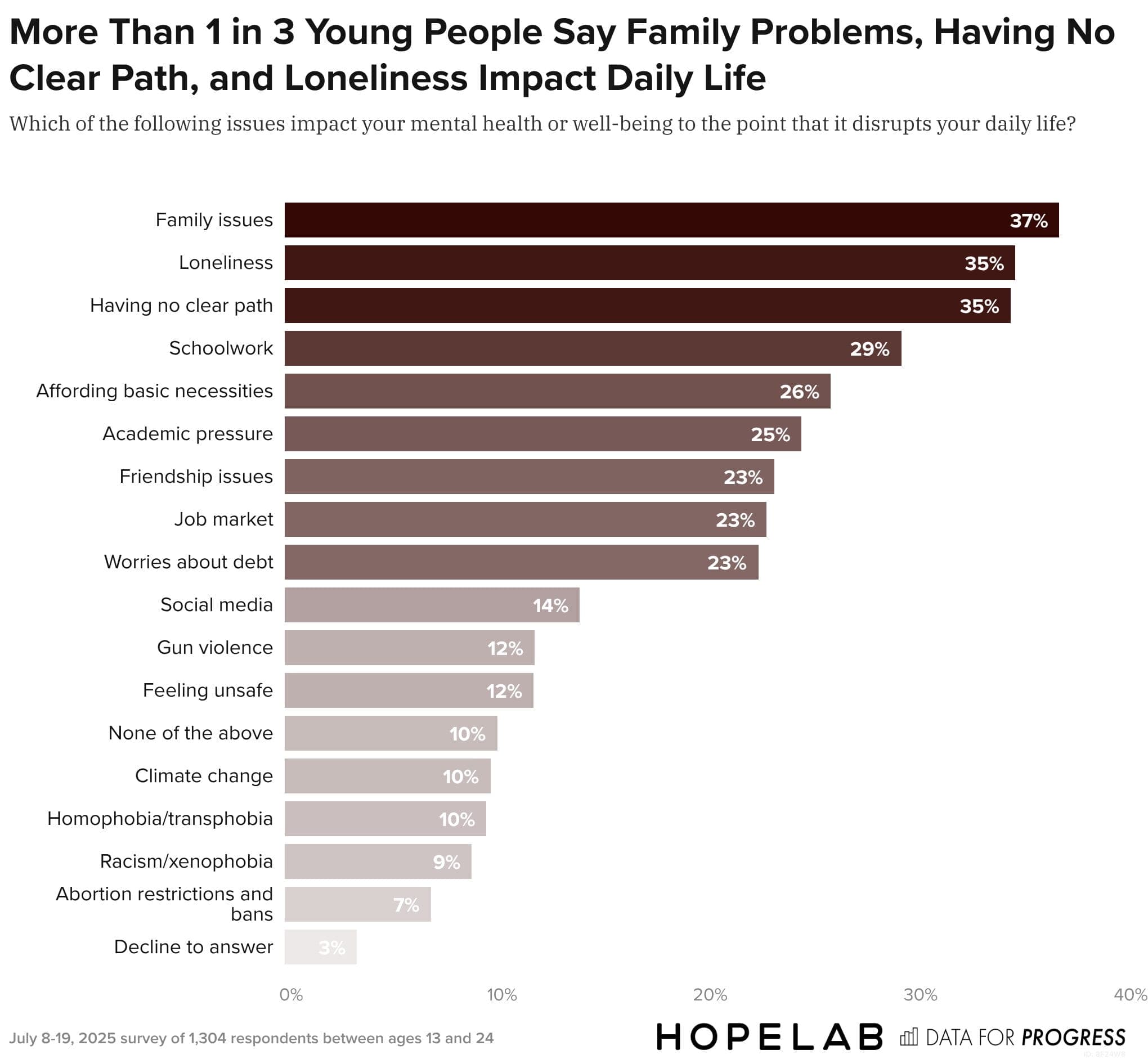
Alarmingly, more than 1 in 3 (37%) young people say family problems, having no clear path (35%), and loneliness (35%) impact their mental health or well-being to the point that it disrupts their daily life.
Once again, groups of young people who face structural barriers report disparate rates of negative mental health impacts.
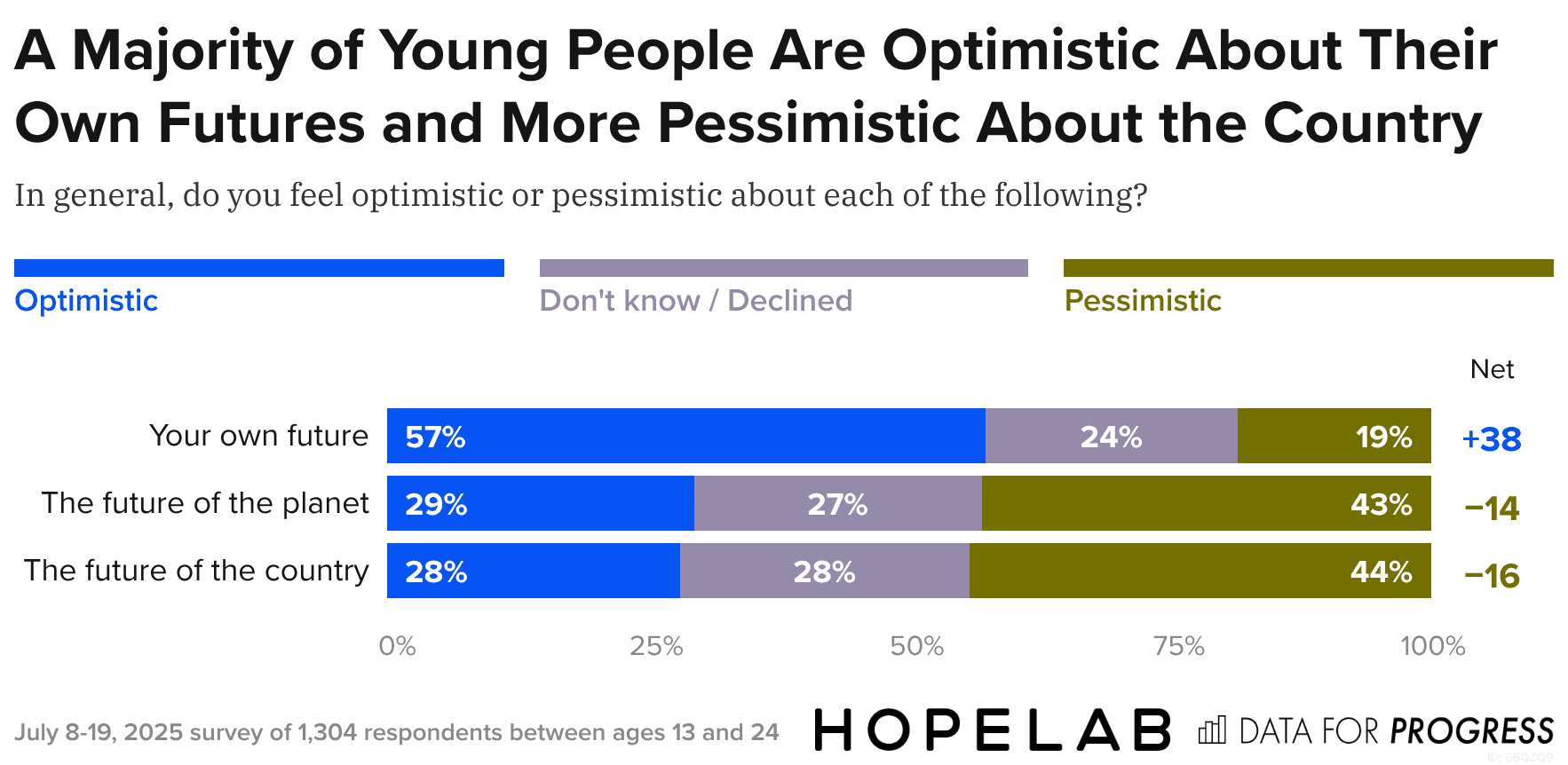
When it comes to the future, young people are generally more optimistic about their own future than the future of our country or planet.
A majority of young people (57%) say they are optimistic about their own future, while a plurality say they are pessimistic about the future of the country (44%) and the future of the planet (43%).
Those who don’t meet basic expenses or struggle to do so are also less optimistic about their own future and the future of our country and planet than young people who live comfortably.
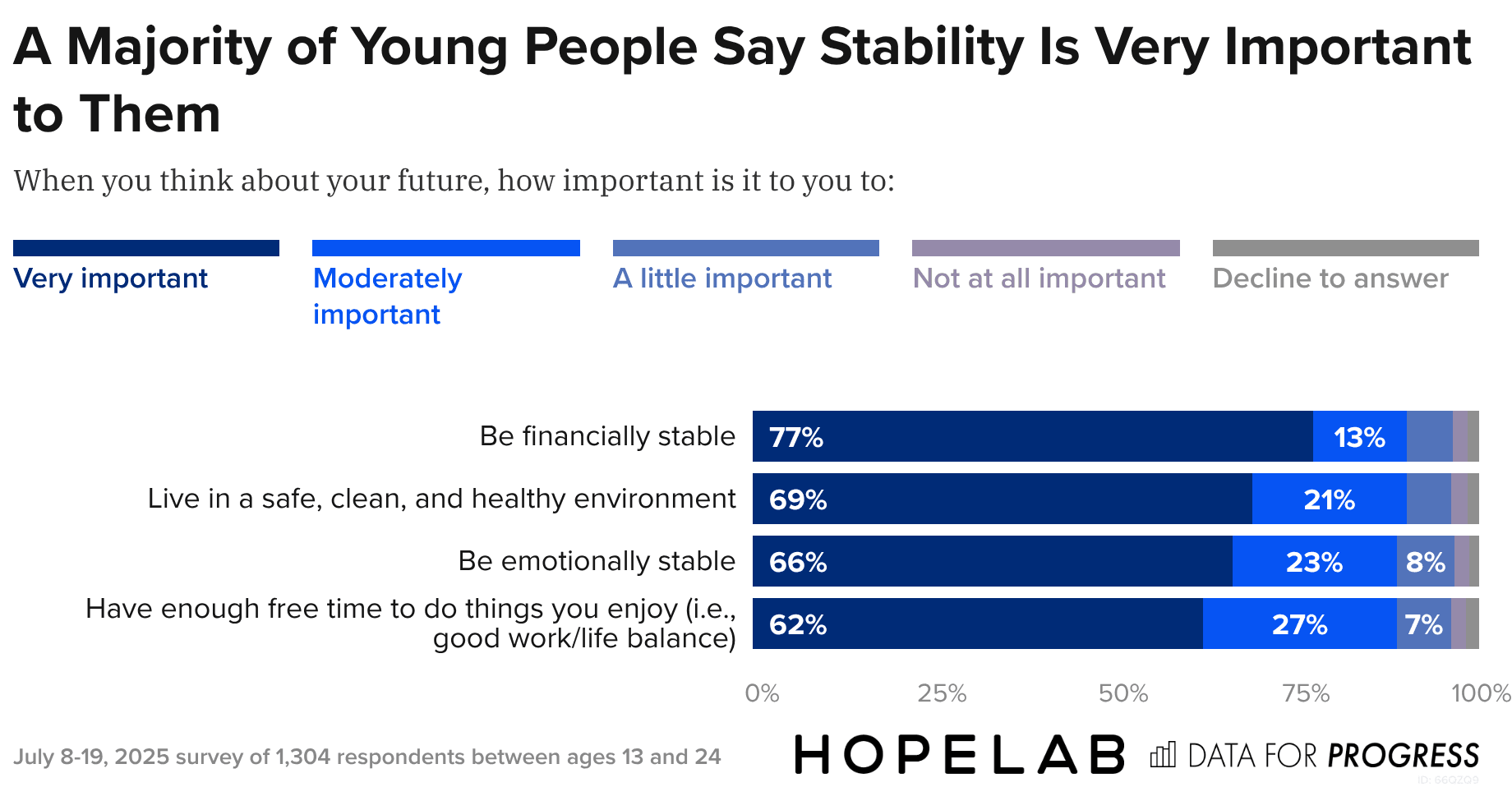
When thinking further about their future, more than 60% of young people say the following things are “very important” to them: “be financially stable,” “live in a safe, clean, and healthy environment,” “be emotionally stable,” and “have enough free time to do things you enjoy (i.e., good work/life balance).” These top findings are consistent across demographic groups.
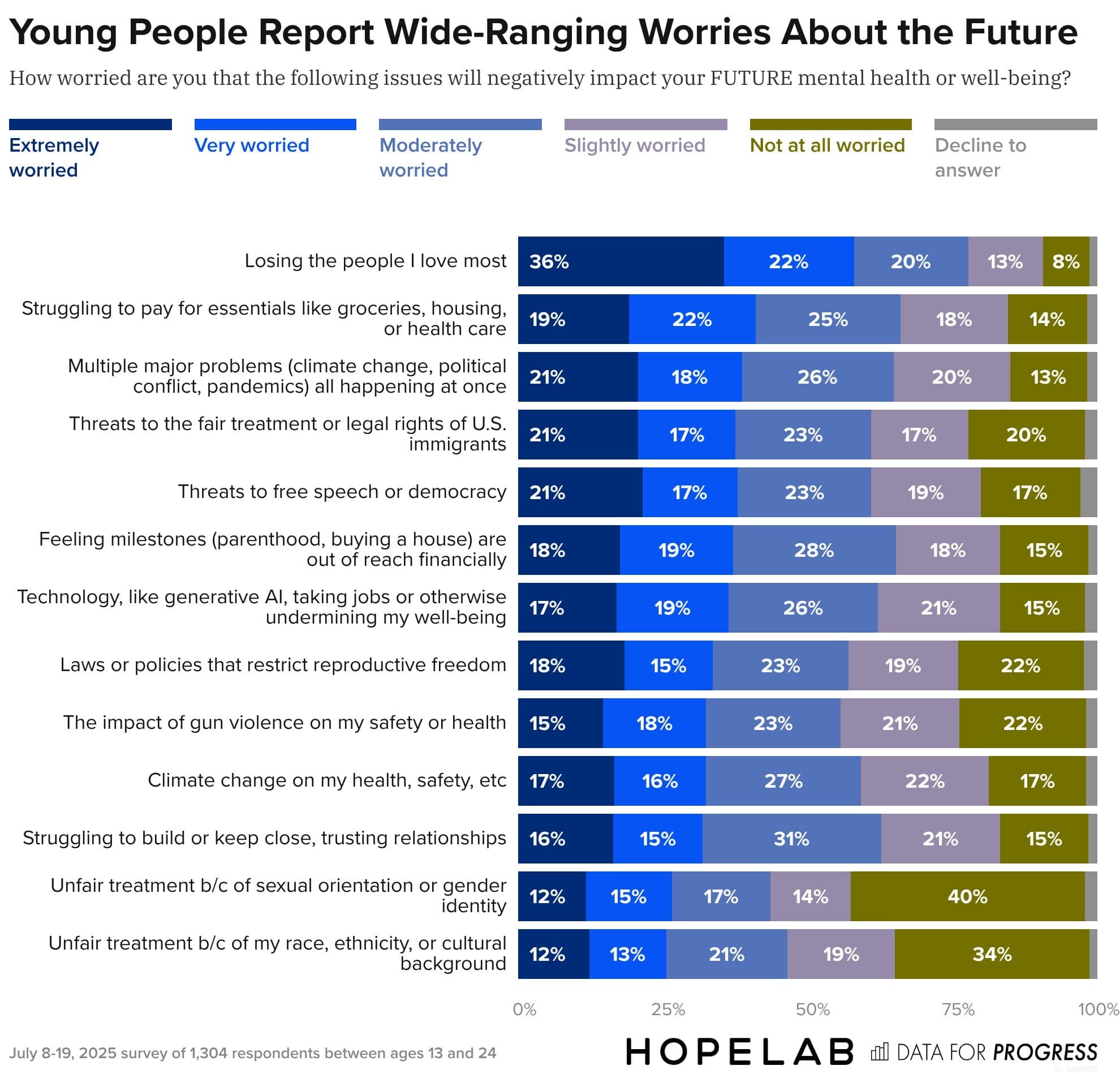
The survey asked young people how worried they are that various issues might negatively impact their mental health or well-being in the future. In response, a majority of young people (58%) say they are “very” or “extremely” worried that “losing the people they love most” will negatively impact their future mental health or well-being.
Despite feeling ample uncertainty, worry, and pessimism about the future, almost all young people can point to something concrete that gives them a sense of hope or optimism.
A majority of young people strongly or somewhat agree they have enough of the sources of support identified as important during survey co-creation, with more than 3 in 5 young people saying they have enough “people in my life who really care about me” (70%), “free time to do whatever I enjoy” (66%), “people or resources that I could turn to if/when I need mental health support” (61%), and “emotional support from my friends” (60%).
More than 40% of young people “strongly agree” that they feel they have enough people in their life who really care about them, while only 6% “strongly disagree.”